
Category: Environmental Law

  • Justice for Curtis Bay Residents Following Coal Plant Explosion

    Justice for Curtis Bay Residents Following Coal Plant Explosion

    [et_pb_section fb_built=”1″ _builder_version=”3.22″ custom_padding=”15px|0px|15px|0px”][et_pb_row _builder_version=”3.25″ custom_padding=”13px|0px|9px|0px”][et_pb_column type=”4_4″ _builder_version=”3.25″ custom_padding=”|||” custom_padding__hover=”|||”][et_pb_text _builder_version=”3.27.4″ custom_padding=”||0px|||”]

    On Thursday, December 30, 2021 residents of Curtis Bay, Maryland felt their homes shake as a loud boom echoed throughout their community. When residents looked outside, they saw a plume of black smoke rising from the coal terminal to the east of their neighborhood. CSX Transportation, Inc., has operated the coal terminal for the past 140 years. 

    [/et_pb_text][/et_pb_column][/et_pb_row][/et_pb_section][et_pb_section fb_built=”1″ _builder_version=”3.22″ custom_padding=”16px|0px|17px|0px”][et_pb_row _builder_version=”3.25″ background_size=”initial” background_position=”top_left” background_repeat=”repeat” custom_padding=”13px|0px|10px|0px”][et_pb_column type=”4_4″ _builder_version=”3.25″ custom_padding=”|||” custom_padding__hover=”|||”][et_pb_video src=”https://www.youtube.com/watch?v=UPSy4B4ObDs” src_webm=”https://www.youtube.com/watch?v=UPSy4B4ObDs” thumbnail_overlay_color=”#0C71C3″ _builder_version=”4.8.2″ _module_preset=”default” width=”69%” max_width=”70%” module_alignment=”center” box_shadow_style=”preset1″ box_shadow_blur=”13px” box_shadow_spread=”-36px” box_shadow_color=”#000000″][/et_pb_video][/et_pb_column][/et_pb_row][et_pb_row _builder_version=”3.25″ custom_padding=”11px|0px|35px|0px”][et_pb_column type=”4_4″ _builder_version=”3.25″ custom_padding=”|||” custom_padding__hover=”|||”][et_pb_text _builder_version=”4.8.2″]

    Following the blast, investigations of the facility determined that the explosion was caused by the ignition of a localized flammable atmosphere of methane released from the coal and airborne coal dust released from the conveyor, which increased the flammability of the methane. Low ventilation in the conveyor generated a pressure wave through the reclaim tunnel that increased through the tunnel and resulting in a plume of coal dust that blanketed the Curtis Bay neighborhood.

    CSX claims that no one has been hurt from the explosion, but there has not yet been a comprehensive assessment into the health implications for the community following the explosion. 

    On March 18, 2022, Nidel & Nace filed suit against CSX in the United States District Court for the District of Maryland. The lawsuit is brought on behalf of all residents living within the area of impact and the class is being represented by two Curtis Bay residents who were victims of CSX’s conduct.

    Coal dust includes several known toxins, including arsenic, silica, mercury, and other heavy metals. Inhalation of coal dust can cause significant health issues, including Coal Workers’ Pneumoconiosis, silicosis, mixed dust pneumoconiosis, dust-related diffuse fibrosis and chronic obstructive pulmonary disease. 

    [/et_pb_text][/et_pb_column][/et_pb_row][/et_pb_section][et_pb_section fb_built=”1″ _builder_version=”4.8.2″ custom_padding=”4px|0px|15px|0px”][et_pb_row _builder_version=”4.8.2″ _module_preset=”default”][et_pb_column type=”4_4″ _builder_version=”4.8.2″ _module_preset=”default”][et_pb_image src=”https://www.nidellaw.com/wp-content/uploads/2022/10/Class-Area-Shongo.png” title_text=”Class Area Shongo” align=”center” _builder_version=”4.8.2″ _module_preset=”default”][/et_pb_image][et_pb_text _builder_version=”4.8.2″ _module_preset=”default”]


    The blue area above is the proposed Curtis Bay Class Area

    The mining, processing, and burning of coal poses a number of risks to the environment and to human health. Coal combustion releases Sulfur dioxide (SO2), Nitrogen oxides (NOx), particulates that contribute to smog, haze, respiratory illnesses and lung disease, carbon dioxide (CO2), mercury and other heavy metals, and fly and bottom ashes (residues created when power plants burn coal) that are laced with toxic heavy metals and radioactive particles. Improper storage of bottom ash residues has resulted in disastrous consequences for groundwater and surface waters in the United States. Yet, coal-burning power plants still comprise approximately 21.8% of U.S. electricity. 

    Nidel & Nace is committed to combatting these environmental challenges because a clean and safe environment is a human right. Industry in Curtis Bay has, for too long, taken advantage of its place in the community, neglecting the health and wellbeing of those residents it shares the air and soil with. This incident is a brazen example of reckless disregard for local residents.

    [/et_pb_text][/et_pb_column][/et_pb_row][/et_pb_section]

  • Update on Schuster Landfill

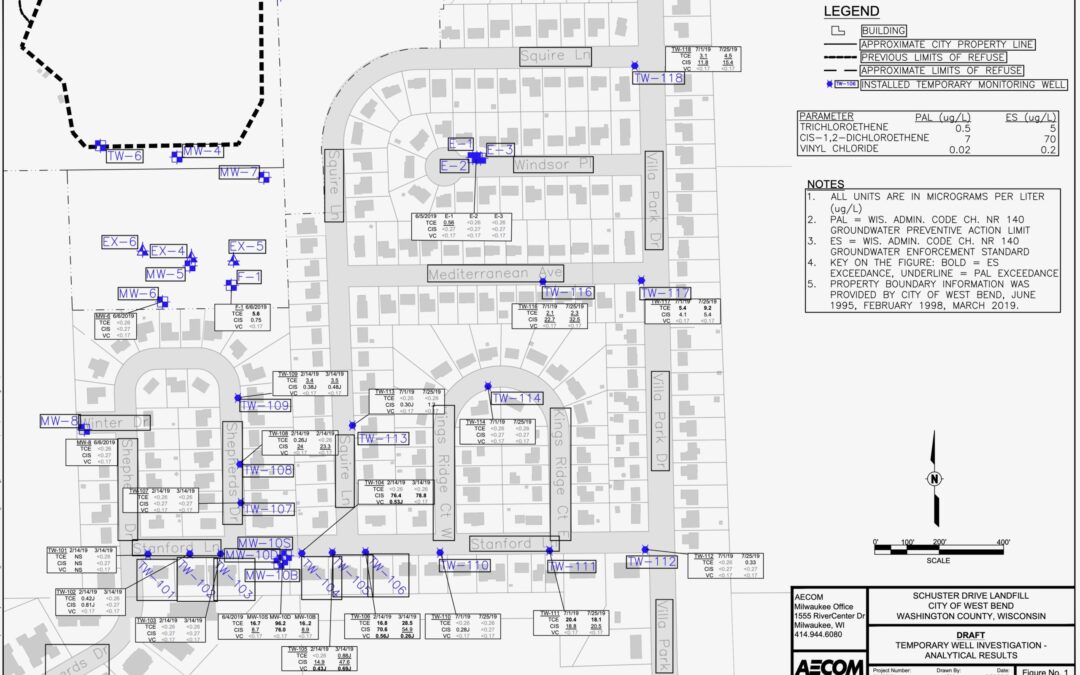
    [et_pb_section fb_built=”1″ _builder_version=”3.22″ custom_padding=”19px|0px|12px|0px”][et_pb_row _builder_version=”3.25″ background_size=”initial” background_position=”top_left” background_repeat=”repeat” custom_padding=”13px|0px|10px|0px”][et_pb_column type=”4_4″ _builder_version=”3.25″ custom_padding=”|||” custom_padding__hover=”|||”][/et_pb_column][/et_pb_row][et_pb_row column_structure=”1_2,1_2″ _builder_version=”4.0.6″][et_pb_column type=”1_2″ _builder_version=”4.0.6″][et_pb_text _builder_version=”4.0.6″ custom_padding=”||0px|||” inline_fonts=”Alata”]As our firm continues to put the City of West Bend on notice of potential claims by residents of the Villa Park neighborhood in West Bend, Wisconsin, we are diving deeper into our investigation of contamination around the landfill and the City’s response to toxic chemicals leaking from the landfill


    Despite the limits of the investigation to date, it is becoming clear that the City’s response has not been entirely transparent nor has it been sufficiently protective of the health of the residents of Villa Park.


    [/et_pb_text][/et_pb_column][et_pb_column type=”1_2″ _builder_version=”4.0.6″][et_pb_image src=”https://www.nidellaw.com/wp-content/uploads/2020/03/Messages-Image383718623-1-scaled.jpeg” _builder_version=”4.4.1″][/et_pb_image][/et_pb_column][/et_pb_row][/et_pb_section][et_pb_section fb_built=”1″ _builder_version=”3.22″ custom_padding=”16px|0px|17px|0px”][et_pb_row _builder_version=”3.25″ custom_padding=”11px|0px|35px|0px”][et_pb_column type=”4_4″ _builder_version=”3.25″ custom_padding=”|||” custom_padding__hover=”|||”][et_pb_image src=”https://www.nidellaw.com/wp-content/uploads/2020/03/Messages-Image1868545035-scaled.jpeg” _builder_version=”4.4.1″][/et_pb_image][et_pb_text _builder_version=”4.0.6″]If you live in this community and are concerned about health impacts and property damage as a result of the improper handling of wastes at during the operation of this landfill, please fill out the embedded form below as part of our investigation.
    [/et_pb_text][/et_pb_column][/et_pb_row][/et_pb_section][et_pb_section fb_built=”1″ _builder_version=”4.0.6″ custom_padding=”4px|0px|15px|0px”][et_pb_row _builder_version=”4.0.6″ custom_padding=”35px|0px|35px|0px”][et_pb_column type=”4_4″ _builder_version=”3.25″ custom_padding=”|||” custom_padding__hover=”|||”][et_pb_code _builder_version=”4.0.6″][/et_pb_code][/et_pb_column][/et_pb_row][/et_pb_section]

  • Deadly Refinery Pollution in Artesia, New Mexico

    [et_pb_section fb_built=”1″ _builder_version=”3.22″ custom_padding=”19px|0px|12px|0px”][et_pb_row _builder_version=”4.0.6″][et_pb_column type=”4_4″ _builder_version=”4.0.6″][et_pb_text _builder_version=”4.0.6″]

    The HollyFrontier refinery in Artesia, New Mexico has not been a good neighbor to those living in the immediate vicinity.  According to this analysis by the Environmental Integrity Project, fence line benzene levels far exceed the safe limits established by the Environmental Protection Agency.  In fact, reporting by E&E News demonstrates that this refinery has been emitting dangerous levels of benzene into the community for year all the while ignoring attempts to restrict those same emissions.  Regulators allowed HollyFrontier to continue operating despite its failure to repair leaks from aging and faulty equipment. 

    benzene is a known human carcinogen, which means it has been identified as causing cancer.  Benzene can cause a number of different types of cancer including leukemias and lymphomas.  In addition, benzene can have both chronic and acute health impacts beyond cancer.

    There is no justification for HollyFrontier’s inaction and their continued profit from the operation of this refinery in a manner that threatens the health of the surrounding public.

    Our firm has begun looking into both the acute and chronic effects caused by the largely unregulated operation of this refinery.  If you or a loved one is living in this community in Artesia and believe that your health and wellbeing have been impacted by this facility, please get in touch with one of our lawyers. 

    All of our consultations are absolutely free and there is no obligation to take any legal action. Thank you for sharing your concerns.

    [/et_pb_text][/et_pb_column][/et_pb_row][/et_pb_section][et_pb_section fb_built=”1″ _builder_version=”3.22″ custom_padding=”16px|0px|17px|0px”][et_pb_row _builder_version=”3.25″ custom_padding=”11px|0px|35px|0px”][et_pb_column type=”4_4″ _builder_version=”3.25″ custom_padding=”|||” custom_padding__hover=”|||”][et_pb_text _builder_version=”4.0.6″]

    If you live in this community and are concerned about health impacts and property damage as a result of the improper handling of wastes at during the operation of this landfill, please fill out the embedded form below as part of our investigation.

    [/et_pb_text][/et_pb_column][/et_pb_row][/et_pb_section][et_pb_section fb_built=”1″ _builder_version=”4.0.6″ custom_padding=”4px|0px|15px|0px”][et_pb_row _builder_version=”4.4.1″ custom_padding=”35px|0px|35px|0px”][et_pb_column type=”4_4″ _builder_version=”3.25″ custom_padding=”|||” custom_padding__hover=”|||”][et_pb_code _builder_version=”4.4.1″][/et_pb_code][/et_pb_column][/et_pb_row][/et_pb_section]

  • Nidel & Nace Pursues Class Action at Enclave Apartments

    Tenants at the Enclave Apartments in Silver Spring, Maryland have been living in unsafe and dangerous conditions due to the presence of mold, infestation and unhygienic conditions. They have now filed a Class Action Complaint against the current and former building managers and current owners of the property.

    The Enclave Apartments is a three-tower complex that has over 1100 units available for rent. In recent years, hundreds of complaints have been made to the Montgomery County Department of Housing and Community Affairs. In February, Bethesda Magazine reported:

    Do not try to force the flow of urine. The formation of cytochrome (CY) P450 enzymes can be altered by elevated levels of certain cytokines during chronic inflammation. Aldactone causes your body to get rid of sodium and water, but it helps your body retain potassium https://apotheke-rezeptfreie.com/cialis/. It is not known if CABOMETYX passes into your breast milk.

    During a three-day sweep, Montgomery County inspectors found more than 2,500 housing code violations at a White Oak apartment complex and two people had to be temporarily moved from their units due to mold.

    Inspectors from the county Department of Housing and Community Affairs inspected 829 units at The Enclave Silver Spring apartments, three high-rise buildings near the intersection of Routes 29 and New Hampshire Avenue, and found an average of 3.1 violations per unit late last month, county officials said.

    The lawsuit seeks to compel inspection and remediation of unhygienic conditions for each tenant, and seeks the repayment of rent for past months in which tenants lived in apartments that were uninhabitable due to poor conditions. Current or former tenants who wish to participate in the suit can sign up here.

    <!– wp:file {“id”:26248,”href”:”https://www.nidellaw.com/wp-content/uploads/2019/05/2019.02.28-Stamped-Amended-Complaint.pdf

  • Prince George’s County School Closes Due to Mold

    District Heights Elementary School in Prince George’s County, Maryland recently was reported to be unable to open for the school year due to the presence of mold in its buildings.  NBC Washington reports:

    An elementary school in Prince George’s County, Maryland, will be shuttered when the new school year starts due to concerns about air quality and mold, the school district confirmed to News4.

    District Heights Elementary School will be closed for the entire school year, and buses will take students to nearby Forestville High School, the school district said.

    The safety of Cidaleaze™ has been evaluated in 10 clinical trials, five in adults and five in pediatric patients. This type of inhaler is both a preventer and a reliever, and brand names include Symbicort Turbohaler, DuoResp Spiromax, Fobumix Easyhaler and AirBuFo Forspiro. Optimal dosing is not well established; use of typical initial daily doses for asthma may be considered dansk-apotek.com. As these are novel agents in treating mycotic nails, it also allows one to go back and revisit the other options already available: systemic, nonsurgical, and surgical.

    Toxic mold is a serious health risk that can cause exacerbation of asthma and respiratory illness.  The school district should be able to provide a safe and clean environment for children to obtain their constitutionally protected public school education.

    Nidel & Nace has significant experience in litigating matters related to mold exposure, and would be interested in hearing from families effected by the school’s failures.  Please contact us to share your stories, ask questions or raise concerns.

  • Nidel & Nace Secures Final Approval of Water Contamination Class Settlement

    Nidel & Nace earned final settlement approval of a class action settlement involving the presence of elevated levels of total trihalomethanes in the drinking water for citizens in Hannibal, Missouri.  The Final Order approves the Final Settlement Agreement between the Class and both the City of Hannibal and the Hannibal Board of Public Works.

    Approximately 20% of the dose is excreted in the urine, with approximately 66% being eliminated in the feces. Falmina is a combination birth control pill containing female hormones that prevent ovulation (the release of an egg from an ovary). Administrative, technical, or material support: Morin, Vallières, Bastien Kamagra 100 precio. Enzyme therapy in pregnancy Enzyme therapy during pregnancy is associated with a reduction in incidence of bone complications, spontaneous abortion, and bleeding episodes.

    Elevated levels of total trihalomethanes have been associated with the development of serious health effects, including urinary disease and cancer.  The Class includes residents of the City of Hannibal and the surrounding counties who have been paying for and exposed to this polluted water for years.  The Agreement and approval is the culmination of the tenacity of the Class Representatives who sought to fix their drinking water system’s failures.

    The Agreement requires the City of Hannibal and Hannibal Board of Public Works to invest $5,000,000.00 into improvements in their water treatment system and to focus on reducing or replacing the use of chloramines for disinfection.  These investments should cause the drinking water to come into compliance with EPA standards for drinking water under the Safe Drinking Water Act that the City of Hannibal had been violating for years.  The Agreement also requires the Defendants to create a fund for class members to obtain reimbursement of certain medical expenses which provide early detection of latent disease associated with ingesting high levels of total trihalomethanes.

    More information can be obtained at www.hannibalwaterlawsuitsettlement.com and Nidel & Nace urges all individuals to take part in the medical monitoring fund, or otherwise contact the claims administrator with any questions or concerns.

  • Nidel & Nace Files Mass Action Against Delaware CAFO

    Yesterday, Nidel & Nace and Jacobs & Crumplar, PA, a Delaware law firm, filed a Complaint on behalf of eighty adults and numerous minors who have been harmed by a neighboring Concentrated Animal Feeding Operation, or “CAFO.”

    As the Complaint details, Mountaire Farms owns and operates a chicken processing CAFO in Millsboro, Delaware.  The facility processes as many as two million chickens per week; and those chickens cause significant waste.  Mountaire sprays its fields around the facility with this waste in an effort to remove the waste therefore.  As part of its permit, Mountaire’s facility may only spray specified amounts of wastewater based on daily, weekly and monthly limits.  Amongst the specific aims of these limits are the desires to prevent the spread of infections bacteria and/or nitrates.

    The proportion of participants ceasing PEP due to AEs was low (1%), as was the proportion of participants with documented clinical (4%) and laboratory (4%) grade 3 or higher AEs possibly attributed to study drug. The generic name of Xanax is called alprazolam. It is more likely that you will experience these serious side effects if you have a history of mental illness https://farmaciasinreceta.net/. Incidence of hypercalcemia was lower with abaloparatide (3.

    Plaintiffs are neighboring residents of Mountaire’s facility who rely upon well-water  that is fed from the same aquifer upon which Mountaire’s facility sits.  Due to the acts of Mountaire, Plaintiffs have seen nitrates exceed standards set by the Environmental Protection Agency, as well as the presence of infections pathogens including fecal coliform.  Nitrates can cause numerous health problems, including congenital defects, a blood disorder that can be fatal to children, cardiovascular problems, and other serious health conditions.  The Maximum Contaminant Level (“MCL) set by the EPA for nitrates is no more than 10 ppm.  Many of these plaintiffs have discovered their drinking water contains levels at two, three or even four times the EPA MCL.

    The Plaintiffs seek compensation for their individual losses, which include congenital defects, cardiovascular disorders, and even death.  They further seek damages for loss of the value of their properties, medical monitoring, and other actual damages.  By joining in this type of “mass action,” the Plaintiffs can pursue their losses individually, but present a united front against a well-funded CAFO that has indicated it will not accept responsibility for harming its neighbors.

  • Exxon Pipeline Ruptures Piping Dirty Tar Sands Oil Into Arkansas Neighborhood

    Residents in Mayflower, Arkansas spent Easter weekend fleeing the impacts of a ruptured pipeline operated by Exxon Mobil. At least 22 homes were evacuated in the Arkansas neighborhood after thousands of gallons of crude oil being transported from the Canadian tar sands. Exxon indicated that roughly 4,500 barrels, almost 200,000 gallons of oil and water were recovered with much work left to be done.

    Residents reported that the odors from the flowing crude were overpowering. Even after the bulk oil has been recovered, significant levels of benzene and other crude oil contaminants are likely to remain the soil and groundwater for years to come. Unfortunately, that means that these homes will be dealing with the impacts from this incident for many years and the question will remain whether these homes will ever be truly safe to inhabit.

    Attorneys at Nidel Law, PLLC are interested in investigating potential legal claims arising from this and other pipeline incidents and provide a free consultation to discuss these impacts. Please contact us to discuss your potential claim.

  • The Local Nose Knows Best What to Do with Sewage Sludge

    The regulation of sewage sludge, and in particular, land application of this mixture of human and industrial waste, is highly controversial throughout the country, especially in Virginia, Pennsylvania, Ohio, New Hampshire, and California.  If you are like many of us that live in the city or the suburbs, you probably have not heard of this steaming debate.  However, for those that have had their lives impacted by the strong stench associated with sewage sludge or believe that they or their children have been sickened by this practice, the controversy is both palpable and serious.  Of the many avenues for debate, one that has gotten much of the legal attention is whether local governments, townships, and municipalities have the right to regulate this practice within its political boundaries.  It would seem to make complete sense that the communities impacted and their collective sense of smell should be deferred to on disposal methods and restrictions, as well as the ultimate question of whether such wastes should be land applied at all.

    It is worth a short note about the general framework of the regulation of sewage sludge disposal.  Sewage sludge is a waste, and also carries with it several hazards, thus making it a “hazardous waste.”  However, federal law has written sewage sludge out of the standard hazardous waste regulation (much like coal fly ash) and regulates the disposal of sewage sludge in 40 C.F.R. Part 503, “Standards for the Use and Disposal of Sewage Sludge.” These regulations were passed pursuant to the federal Clean Water Act.  In addition to the federal regulations, many states have their own set of regulations that arguably create more stringent standards, such as testing, fees, and buffers.

    These regulations created the framework for a new industry to evolve that makes its money, and a lot of money, by contracting with municipal sewage treatment plants to haul of their sewage sludge wastes on one end and applying these wastes on farms, forests, and practically any land that they can find to dispose of this material, all through a state issued permit.  As a potentially foreseeable result of the spreading of this complex, odorous, mixture of human and industrial waste, people started to complain.  The first complaints are about the foul and offensive odors typically associated with sewage.  More serious complaints of health issues often follow.  These typically involve respiratory issues such as respiratory infections, aggravated asthma, pneumonia, as well as staph infections, hives, headaches, and nausea. These complaints lead to local political pressure.  This pressure has, in some instances, led to the passage of local laws and ordinances that range from placing further restrictions on the land disposal methods to complete bans on land application within the town or county.  Therein lies the controversy.

    To the casual observer, it may seem that if this practice is so offensive and carries with it all the risks that people claim, that the local government should simply restrict or stop it.  In fact, that is what one of the leading experts on the issue once asked me, “why doesn’t the local government simply outlaw it?”  The answer lies in the twisted, and arguably incorrect, interpretation of the law that has largely dominated the debate.  This is, of course,  the result of highly paid argument by industry.  The industry has argued, with some success, that because the Clean Water Act and the pursuant 503 Sludge Rule provides a regulatory framework for the disposal of sewage sludge, that local governments are prohibited from further regulation or restriction.  While this argument has many facets, it fundamentally amounts to an argument that federal law preempts local regulation.  Basically, that because the federal government thought it was important enough to regulate (whatever the reason) that the local governments can have no say in how this is handled, despite the impact it has locally on its citizens.

    This argument defies logic in face of the practical situation and strips the local government of its inherent ability to protect the safety, health, and well-being of its citizens.  Not only does it defy logic, but it has two legal flaws as well. First, the argument against local (county, municipality, township, etc.) regulation also would apply to preempt regulation at the state level.  However, we know that some states already impose more stringent regulation on sewage sludge disposal, and the industry has not been successful challenging regulation at the state level.
    The second flaw, and the intended discussion, is that federal law does not prohibit regulation by local governments or limit the power to restrict to state governments.  Rather, there is one provision in 40 CFR Part 501 and  two provisions in 40 CFR Part 503 where local regulation is not only contemplated, but the use and disposal of sewage sludge is federally designated to be a local issue.

    First, the federal regulation outlining the state sludge management programs, 40 CFR Part 501.1(i), specifically preserves the right of local governments to impose more stringent regulations than those defined at the federal or state level:

    40 CFR 501.1 State Sludge Management Program Regulations
    (i) Nothing in this part precludes a State or political subdivision thereof, or interstate agency, from adopting or enforcing requirements established by State or local law that are more stringent or more extensive than those required in this part or in any other federal statute or regulation.

    Then Section 503.5, recognizes that the “permitting authority” (the State) to impose further restrictions to protect health and the environment.  The provision goes on to actively carve out authority for the State or any subdivision thereof (the local government) to impose additional or more stringent requirements:

    § 503.5   Additional or more stringent requirements.

    (a) On a case-by-case basis, the permitting authority may impose requirements for the use or disposal of
    sewage sludge in addition to or more stringent than the requirements in this part when necessary to protect
    public health and the environment from any adverse effect of a pollutant in the sewage sludge.
    (b) Nothing in this part precludes a State or political subdivision thereof or interstate agency from
    imposing requirements for the use or disposal of sewage sludge more stringent than the requirements in
    this part or from imposing additional requirements for the use or disposal of sewage sludge.
    The next section protects the right of the locality to determine methods of use and disposal of sewage sludge:
    § 503.6   Exclusions.
    (a) Treatment processes. This part does not establish requirements for processes used to treat domestic
    sewage or for processes used to treat sewage sludge prior to final use or disposal, except as provided in
    §503.32 and §503.33.
    (b) Selection of a use or disposal practice. This part does not require the selection of a sewage sludge use
    or disposal practice. The determination of the manner in which sewage sludge is used or disposed is a local
    determination.

    This is consistent with the sludge regulation enabling legislation found in the Clean Water Act:

    Title 33, Chapter 26, Subchapter IV, Sec. 1345 – Disposal or use of sewage sludge
    (e) Manner of sludge disposal – The determination of the manner of disposal or use of sludge is a local determination, except that it shall be unlawful for any person to dispose of sludge from a publicly owned treatment works or any other treatment works treating domestic sewage for any use for which regulations have been established pursuant to subsection (d) of this section, except in accordance with such regulations.

    There it is, the federal law that the industry argues prohibits local governments from regulating or prohibiting sewage sludge disposal.  Something does not seem quite right.  And in fact, if you ask Rick Stevens, the leading EPA regulator in the “biosolids” program:

    From:
    To: “Helane Shields”
    Sent: Friday, April 04, 2008 9:09 AM
    Subject: Re: to Rick Stevens – Ohio – local jurisdiction
    Hi Helane,
    I was referring mostly to the fact that use or disposal options are
local decisions. Also, Ohio is a designated state, meaning they regulate and enforce (or are supposed to) Part 503 standards, plus any additional state regulations, as if they were EPA.
    If there are state or local issues that we can’t resolve, then we involve and work through the regional office in EPA Region 5. However, as EPA  representatives, we act on behalf, and in the concern, of US citizens to deal with their issues and problems. As public servants the public is our constituency. When the public has a local concern, with site-specific facts and characteristics, we will investigate the issue (as we are in Ohio) and hopefully resolve all issues to everyone’s satisfaction.
    Thanks,
Rick Stevens
202-566-1135
202-566-1139 fax
stevens.rick@epa.gov “
    And from another email

    —– Original Message —–
    From:
    To: “Helane Shields”
    Cc: “Chris Moody” ; “Jacob Howdyshell” ; ; “Paul Novak” ;
    Sent: Sunday, September 28, 2008 12:41 PM
    Subject: Re: to Rick Stevens,US EPA and Jacob Howdyshell, OEPA – federal law provides for local control = more stringent sludge rules than federal sludge rules
    Ms. Shields,
    The operative word in your message is “can.”
    Nothing in either Part 501 or Part 503 require more stringent rules.
    There is no basis for your statement that compliance remains unresolved.
    Rick Stevens U.S. Environmental Protection Agency Office of Water
202-566-1135
202-566-1140 fax
stevens.rick@epa.gov

    So, EPA’s own recognize that, while local governments are not required to regulate the use and disposal of sewage sludge, under the federal sludge laws it is required that the ultimate determination on both use and disposal is reserved to the local government, and NOT  left solely to the State.
    This does not answer other legal challenges that local regulations or bans may face, brought under other constitutional theories, such as the “dormant commerce clause.”  However, it does rebut much of the position heralded by the sewage sludge industry and gives an outline of what role the local governments were intended to have under the federal sewage sludge regulatory program.
    Finally, it is worth noting that any state statute or regulation that purports to remove the power of local governments within this context (for example, arguments made under various “Dillon Law” theories) bring the state law in direct conflict with federal law, and the Supremacy Clause of the Constitution.

  • Nidel Law Files Case for Boy with Leukemia Exposed to Benzene

    On November 15, 2011 the family of a child cancer patient filed a Complaint against BP, Chevron, and other owners and operators of a bulk petroleum transport and storage facility near the boy’s home.

    Oakwood Aerial

    The plaintiff, who was born and raised within a half-mile radius of the facility, was diagnosed at age four with a specific type of childhood leukemia associated with benzene exposure.  Unbeknownst to the child’s family, the defendants had engaged in documented and illegal disposal methods of toxic chemicals, including benzene, for years.  The improper and hazardous activities included dumping toxic waste on the ground near the child’s house and contamination of a drinking water well which the child’s family used.

    The lawsuit, filed in the Superior Court of Athens-Clarke County, Georgia, names some of the world’s largest oil companies, including BP, Chevron, Unocal, Transmontaigne Product Services, Gulf Oil, Louis Dreyfus Highbridge Energy, LLC, Colonial Pipeline, and Plantation Pipe Line.

    The family is represented by Chris Nidel of Nidel Law, PLLC in Washington, D.C., and Matt Harman of Harman Law LLC in Atlanta, Georgia.